Showing posts with label Exothermic and Endothermic Reaction. Show all posts

Thursday, 19 February 2026

Answer Key_Simulation Test


To download the question paper: here
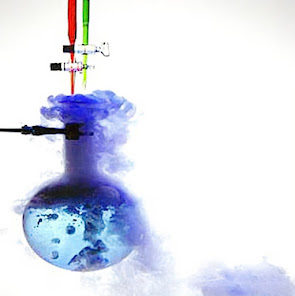
Chemical Energetics-Simulation Test


The answer key is here

Wednesday, 25 October 2023

IGCSE Chemistry – Chemical Energetics Worksheet


IGCSE Chemistry – Chemical Energetics

Name :

Class/# :

Day, Date :

Question 1: Multiple Choice

  1. When a chemical reaction absorbs heat from the surroundings, it is called: A) Endothermic B) Exothermic C) Isothermic D) Thermogenic

Question 2: Fill in the Blanks 2. In an exothermic reaction, the surroundings __________ heat and the temperature of the surroundings __________.

Question 3: Short Answer 3. Explain the difference between endothermic and exothermic reactions, providing an example for each.

Question 4: Calculation 4. Calculate the energy change when 2 moles of methane (CH₄) are burned completely in oxygen according to the following equation: CH₄(g) + 2O₂(g) → CO₂(g) + 2H₂O(l) ΔH = -890 kJ/mol

Question 5: Application 5. Consider a reaction where 50.0 g of sodium hydroxide (NaOH) is dissolved in 200 mL of water, and the temperature of the solution increases from 25°C to 40°C. Calculate the energy change for this process. (Assume the density of water is 1 g/mL and specific heat capacity of water is 4.18 J/g°C)

Question 6: Diagram Analysis 6. Study the energy profile diagram below and answer the questions. (Insert a simple energy profile diagram with reactants and products labeled, along with activation energy.)

a) Identify the reactants and products. b) Label the activation energy on the diagram. c) Determine whether the reaction is endothermic or exothermic. d) Explain what the activation energy represents in a chemical reaction.

Question 7: Research and Analysis 7. Research an industrial process that involves an exothermic reaction. Explain the process, the reaction involved, and why the reaction being exothermic is beneficial for the industry.

Question 8: Critical Thinking 8. Discuss why it is important for scientists and engineers to understand the concept of energy changes in chemical reactions, especially in fields such as environmental science and pharmaceuticals.

Friday, 20 October 2023

IGCSE Chemistry: Chemical Energetics, worksheet

Heat Exchange in Reactions

  • When a chemical reaction occurs, it involves the transfer of energy into and out of reaction mixtures.
  • The terms used to describe this are the system (what happens in the chemical reaction) and the surroundings (anything other than the chemicals reacting)
  • The energy within the system comes from the chemical bonds themselves which could be considered as tiny stores of chemical energy.
  • The energy transferred is in the form of heat energy, although sometimes other types of energy are produced such as light or sound.

Exothermic Reactions

  • In exothermic reactions energy is transferred to the surroundings so the temperature of the surroundings increases. 
  • This energy is transferred from the chemical energy store of the chemical system to the surroundings and so the energy of the system falls - this means that the energy change is negative
  • The overall transfer is from the system to the surroundings.
  • Combustion, oxidation, and neutralisation reactions are typical exothermic reactions.
  • Hand warmers used in the wintertime are based on the release of heat from an exothermic reaction.
  • Self-heating cans of food and drinks such as coffee and hot chocolate also use exothermic reactions in the bases of the containers.

Exothermic reactions: Heat is released.

  • 1) Combustion: The burning of carbon-containing compounds uses oxygen, from air, and produces carbon dioxide, water, and lots of heat.
  • 2) Rain: Condensation of water vapor into rain releasing energy in the form of heat is an example of an exothermic process.

Endothermic Reactions

  • In endothermic reactions energy is taken in from the surroundings so the temperature of the surroundings decreases
  • This energy is transferred to the chemical energy store of the chemical system and so the energy of the system increases - this means the energy change is positive.
  • The overall transfer is from the surroundings to the system.
  • These types of reactions are much less common than the exothermic reactions.
  • Electrolysis, thermal decomposition reactions and the first stages of photosynthesis are typical endothermic reactions.
  • Sports injury treatments often use cold packs based on endothermic reactions to take heat away from a recently injured area to prevent swelling.

Endothermic reactions: Heat is absorbed.

  • 1) Photosynthesis: Plants absorb heat energy from sunlight to convert carbon dioxide and water into glucose and oxygen.
  • 2) Cooking an egg: Heat energy is absorbed from the pan to cook the egg.


Energy Level Diagrams

  • Energy level diagrams (sometimes called reaction pathway diagrams or reaction profiles) are graphical representations of the relative energies of the reactants and products in chemical reactions.
  • The energy of the reactants and products are displayed on the y-axis and the reaction pathway (a bit like time) is shown on the x-axis.
  • The difference in height between the energy of reactants and products represents the overall energy change of a reaction.
    • This is usually a sketch but can be drawn to scale if data is provided.
  • Arrows on the diagrams indicate whether the reaction is exothermic (overall reaction arrow is downwards pointing, showing that the system has lost energy) or endothermic (overall reaction arrow is upwards pointing, showing that the system has gained energy)
  • The initial increase in energy represents the activation energy (Ea), which is the minimum energy that colliding particles must have in order to react.
  • The greater the initial rise, the more energy that is required to get the reaction going e.g. more heat needed.


EXERCISE WORKSHEET

Wednesday, 25 September 2013

Pattern of Reactivity Quiz

REACTIVITY SERIES - Chem is try  2
Workout these questions with your learning partner. There are 40 marks possibly.


1)      Answer the following questions in full sentences.
a)     Why does gold occur native (uncombined) whereas zinc does not?
………………………………………………………………………………………………
b)     Why was silver used to make coins in the past?
………………………………………………………………………………………………
c)      Why is copper used to make electrical cables and wires?
………………………………………………………………………………………………
 (3)
  2)      The following metals are listed in order of reactivity (most reactive first)
sodium  >  magnesium  >  zinc  >  copper
a)     Describe what each metal does when
(i)    heated in air  …………………………………………………………..
(ii)  added to dilute hydrochloric acid……………………………………..
b)     Which of the four metals would be suitable for making saucepans?  Explain why the others are not.
………………………………………………………………………………………………
………………………………………………………………………………………………
(5)

3)     Describe what you would see if you dropped a piece of magnesium ribbon into some copper sulphate solution in a test tube.  Write a word equation for the reaction.
………………………………………………………………………………………………
……………………………………………………………………………………………...
………………………………………………………………………………………………
………………………………………………………………………………………………
(3)

4)     Complete the following word equations.
a)     zinc   +   lead nitrate solution  ………………………………………………………….
b)     iron   +   zinc sulphate solution  ………………………………………………………..
c)      lead   +   copper nitrate solution ………………………………………………………
d)     magnesium   +   zinc chloride solution  ………………………………………………..
e)     copper   +   sodium chloride solution  …………………………………………………
f)       zinc   +   iron sulphate solution  ………………………………………………………..
g)     gold   +   silver nitrate solution  ………………………………………………………..
h)     magnesium   +  calcium nitrate solution  ……………………………………………..
(8)
5)     Three metals X, Y and Z have the following reactions:-
Y will displace X from a solution of its salt.
Z will displace both X and Y from solutions of their salts.
Place the three metals in order of reactivity, starting with the least reactive.
………………………………………………………………………………………………
(2)

6)     Here is a list of metals in order of decreasing reactivity.  Q and R are mystery metals.
K > Q > Ca > Mg > Al > Zn > R > Fe > Cu
a)     Will Q react with cold water?                                                              …………
b)     Will R react with cold water?                                                                              …………
c)      Will R react with dilute hydrochloric acid?                                 ...……….
d)     Will R displace copper from copper sulphate solution?    ...……….
e)     Write word equations for any reactions in parts a) to d)
………………………………………………………………………………………………….
………………………………………………………………………………………………….
………………………………………………………………………………………………….
………………………………………………………………………………………………….
(6)
7)     Describe everything you see when sodium is added to water containing universal indicator.

Name the two chemical products of sodium reacting with water and give the symbol equation for the reaction of sodium with water.
(3)
8)     (a) Give two observations that could be made after adding zinc to copper(II) sulphate solution.

(b) Give the symbol equation for the reaction between zinc and copper(II) sulphate solution.

(4)
(c) explain why this is an example of a displacement reaction.

  9   (a) Give three observations that could be made when magnesium reacts with sulphuric acid.
     (b) Give the word and symbol equation for zinc reacting with sulphuric acid.
     (c) From copper, iron, magnesium and zinc: Which reacts with acid (i) fastest?, (ii)slowest?
(6)


Wednesday, 18 September 2013

REACTIVITY SERIES worksheet

Workout these questions below.


Name                   : ______________________________              Marks   :
Date                      : ______________________________


1.    Katie and Nando have identical new bicycle. Katie lives in a dry, cool, grassland area and Nando lives in warm, wet region on the coast. Which bicycle may show signs of rusting first? Explain your answer.

2.    What is the relationship between rusting of metals and their reactivity?

3.    Iron, Aluminum, Lead, Copper, Tin, Zinc, Magnesium. Which of these element will rust first and which is the last?

Arrange the elements according to the reactivity. (most reactive to less reactive)

4.    Suggest the statement below:
a.         The roof of the house are potassium plate
b.         We can protect the fence in the yard by painting

Tuesday, 28 May 2013

Exothermic and Endothermic Quiz

Exothermic and Endothermic Reaction Quiz


Monday, 13 May 2013

Exothermic and Endothermic Reaction part-2


klik disini ya
password : ******** (via whatsapp/sms  ya..)


Exothermic and Endothermic Reaction part-1


Exothermic and Endotermic Reaction presentation PART 1 [di sini]

Silahkan klik disini untuk mendownload


Recent Posts

Contact Form

Name

Email *

Message *